
SIMPLIFIED CONSULTING / CHENNAI
We start with clarity, understanding the opportunity before shaping the solution.
Businesses are connected systems. Sales, people, customers, operations, pricing, products and processes rarely fail independently. We take the time to understand how the business actually works before defining what needs fixing.
Before we solve the problem, we make sure it’s the right problem.
THE BUSINESS
Strategy
Market
Products
Processes
People
Customers
Operations
Finance
THE PROBLEM WITH PROBLEMS
What you see is often only the symptom.
A business may come to us because sales have fallen. That does not automatically make it a sales problem. The issue may sit in pricing, product relevance, customer experience, distribution, capacity, lead quality, incentives, service levels, internal communication or several of them at once.
So we do not begin with a solution.
We begin with questions.
Sales are falling.
↓
Product
Pricing
Market
Customers
Sales process
Distribution
Delivery
People
Competition
Service
↓
The stated
problem
We need more salespeople.
↓
The problem
worth solving
Slower response times and unclear ownership in the sales process.
HOW WE THINK
Understand the business before prescribing the answer.
We don’t jump to solutions. We look across the business, join the dots and define the real problem before assessing options and helping you implement what works.
01
▢ →
Start with what you are seeing
We begin with what you are experiencing, what has changed and what you believe may be causing it.
02
◯ →
Look beyond the obvious
We speak to people, look at processes, customers, numbers, competitors and the way decisions move through the organisation.
03
⌘ →
Join the dots
Individual observations begin to show relationships. That is usually where symptoms start becoming causes.
04
▤ →
Define the problem properly
Before discussing solutions, we agree on what the real problem is, and what it is not.
05
☼ →
Work through the options
We assess possible responses, their impact, cost, feasibility and consequences elsewhere in the business.
06
◎
Stay close to implementation
Advice is useful only when something changes. Where needed, we stay involved while you put the decision into practice.
WHAT WE WORK ON
Different symptoms.
One business underneath.
We have areas of expertise. We do not have a standard prescription. Every engagement starts with the business and the situation in front of us.
▥
Business diagnosis
& problem framing
Business health review
Root-cause investigation
Problem framing
Management interviews
Cross-functional assessment
Priority setting
◉
Strategy & growth
Business strategy
Revenue strategy
Growth opportunities
Business model review
Market entry
Decision support
◯◯
Market & customer
understanding
Market research
Customer interviews
Competitor analysis
Opportunity assessment
Field research
Test marketing
⚙
Operations & process
Process review
Bottleneck analysis
Workflow redesign
Capacity and utilisation
Productivity
Cross-functional coordination
◯◯
Organisation & people
Roles and accountability
Organisation design
Team effectiveness
Management capability
Internal communication
People development
↗
Implementation
Action planning
Pilot programmes
Implementation support
Progress reviews
Measurement
Course correction
A problem may begin in one area and lead us into three others. That is normal. Businesses do not operate in service categories.
WHAT THIS LOOKS LIKE IN PRACTICE
We are not interested in treating symptoms indefinitely.
The first problem you notice is not always the problem worth solving. We look for what is driving the symptom before deciding what to change.
“We need more sales.”
What looked like a demand problem turned out to be a conversion problem. Enquiries were coming in, but follow-up was inconsistent, ownership was unclear and proposals were taking too long to reach customers.
WORK
Sales process review / response times / roles / conversion tracking
“Our team is not performing.”
The issue was not simply capability. Priorities were changing too often, responsibilities overlapped and managers were stepping into operational work instead of managing outcomes.
WORK
Role clarity / workflow / accountability / management effectiveness
“We are losing customers to cheaper competitors.”
Initial concern centred on price. Customer conversations showed that buyers did not clearly understand the difference in value, service or outcome between the business and lower-priced alternatives.
WORK
Customer research / competitive analysis / positioning / sales communication
A SMALL CONSULTING TEAM
Experience built inside businesses, not outside them.
A Chennai-based consulting team with experience across business, research, operations, people, markets and communication.
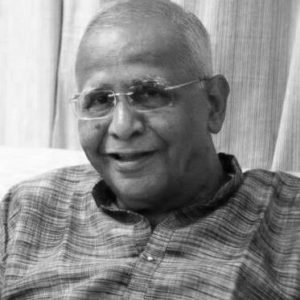
Ram Dharmarajan
Business, operations and commercial strategy
Ram brings decades of experience building, operating and advising businesses. His work focuses on understanding how businesses make money, where value is being lost and what needs to change to improve performance.
Areas of focus: Operations | Profitability | Commercial strategy | Business review

Archana Ram
Research, markets and communication
Archana works at the intersection of research, customer understanding and communication. She helps businesses turn scattered information into useful insight about markets, customers and how the business is perceived from the outside.
Areas of focus: Research | Customer insight | Market analysis | Communication

Ajay Athreya
Problem solving, people and execution
Ajay works across business problems that sit between strategy, people and execution. His focus is on understanding how decisions translate into day-to-day behaviour, identifying where things stop working and helping teams make change practical.
Areas of focus: Problem solving | Organisation development | Execution | Business development
WHEN TO TALK TO US
You do not need to know what the solution is.
You may not even need to know exactly what the problem is.
- something that used to work no longer does
- growth has slowed and the reason is unclear
- the same problem keeps returning
- different teams have different explanations
- decisions are being made with insufficient information
- the business has grown but its processes have not
- you are considering a significant move and want another perspective
- you have already tried the obvious solution
Tell us what you are seeing.
We’ll start there.
START WITH THE SITUATION
Tell us what is happening in the business.
You do not need a polished brief or a finished diagnosis. Start with what you are seeing and what has changed.